The AI-Assisted Writing Workflow: A Complete Framework for Research, Drafting, and Editing
Writing has always been a balance between creativity and efficiency—but modern demands have pushed that balance to its limits. Faster turnaround times, higher content volume, and increasing quality expectations make traditional writing workflows difficult to sustain. This is where AI-assisted writing workflows are changing how content is created.
Rather than replacing writers, AI tools enhance each stage of the writing process. From accelerating research and generating structured drafts to refining language and improving clarity during editing, AI acts as a support system that reduces friction and frees writers to focus on higher-level thinking. When used intentionally, these tools help transform writing from a linear, time-intensive task into a flexible, repeatable workflow.
In this guide, we’ll break down a complete AI-assisted writing framework—covering research, drafting, and editing—so you can integrate AI into your workflow in a way that improves efficiency without sacrificing quality or originality.
Understanding the AI-Assisted Writing Process
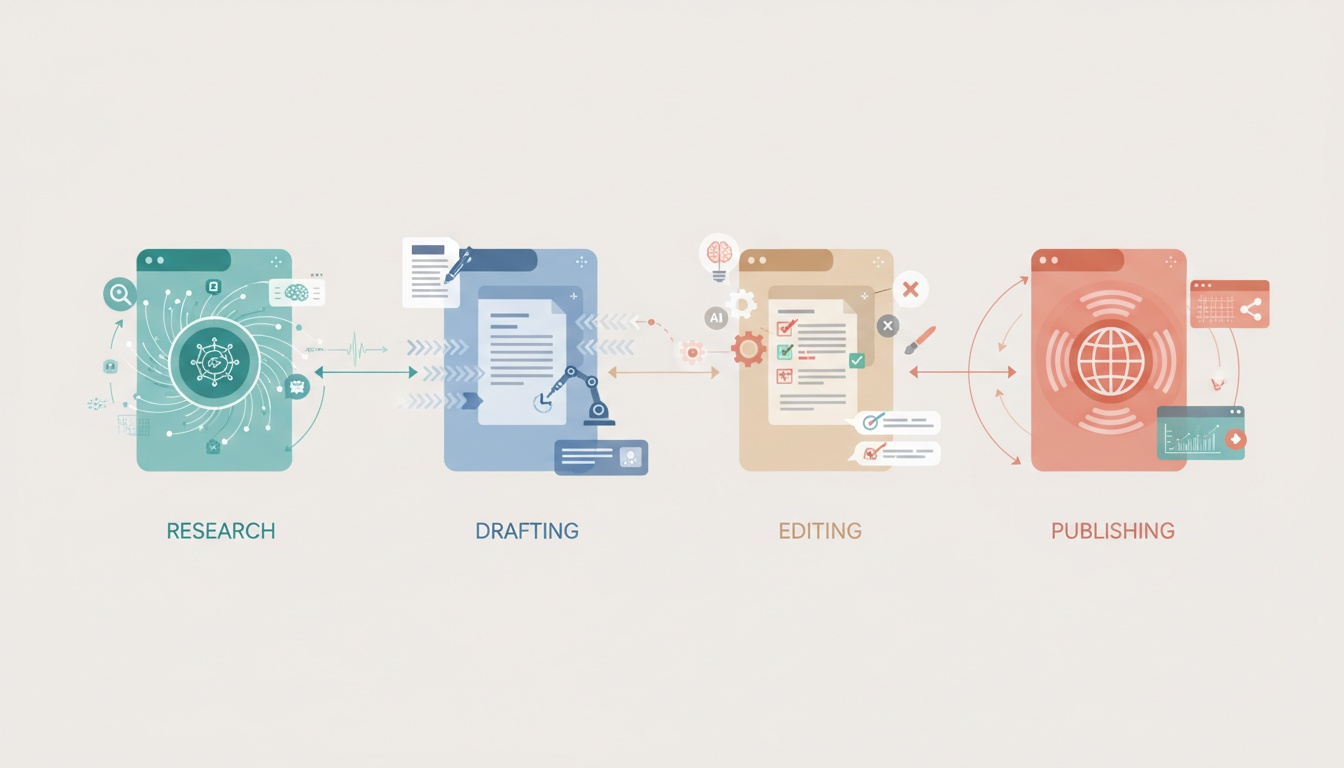
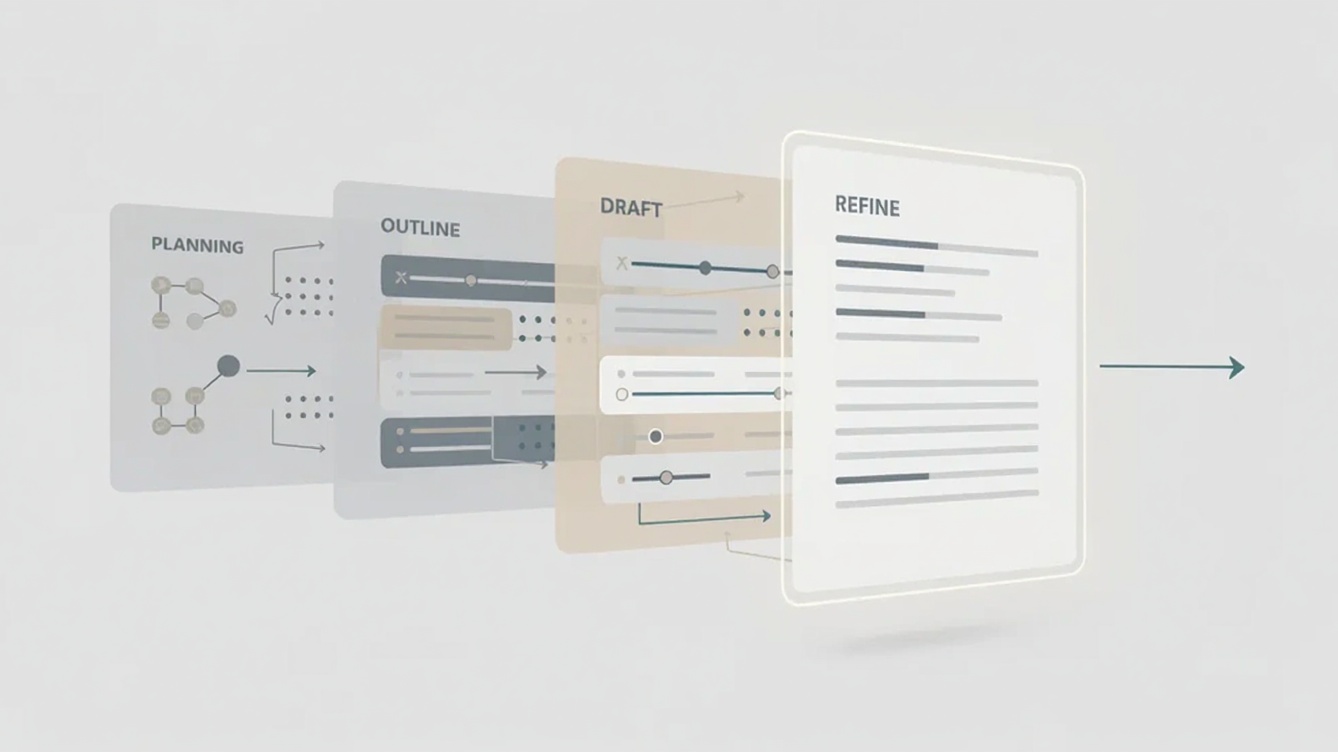
The AI-assisted writing process can be divided into three main stages: research, drafting, and editing. In the research phase, AI tools, such as content generation platforms and data aggregators, streamline the gathering of relevant information, helping writers find reliable sources and insights quickly. During drafting, writing automation tools can enhance creativity by providing suggestions, synonyms, and even structured outlines, turning rough ideas into well-organized drafts. For instance, tools like OptiWrite AI can assist in generating content based on prompts, making the initial writing phase efficient within the AI-assisted writing workflow.
Finally, in the editing stage, AI-powered grammar checkers and style enhancers, such as OptiWrite AI or ProWritingAid, refine the text, ensuring clarity and coherence. By integrating these content creation tools into each phase, writers can significantly enhance their productivity, producing high-quality content that resonates with their audience.
Step 1: Research with AI
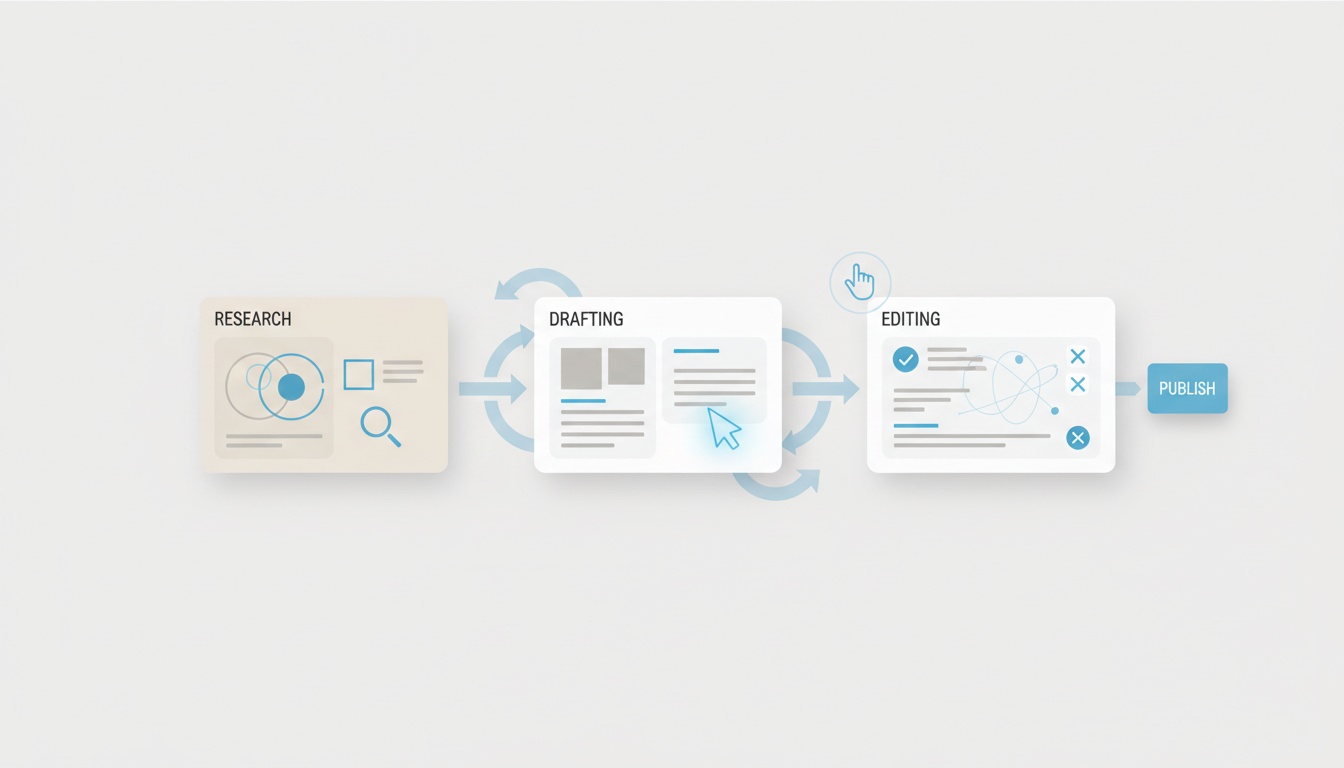
To kickstart your AI-assisted writing workflow, effective research is crucial for bolstering writing efficiency. Begin by utilizing AI-powered research assistants which help in organizing and managing sources systematically. These tools streamline the data-gathering process, allowing you to focus on synthesizing information rather than being bogged down by the logistics of managing references.
Additionally, leverage AI-driven plagiarism checkers such as Grammarly or Turnitin to ensure the originality of your content. By doing a preliminary check for potential plagiarism, you not only maintain the integrity of your work but also save time during the editing phase.
Finally, consider AI-powered research assistants for ideation and fact-checking. By asking targeted questions, you can refine your research scope and extract valuable insights that enhance your writing's credibility and depth.
Step 2: Drafting Techniques Utilizing AI
Incorporating AI into the drafting process can significantly enhance efficiency and creativity. One effective drafting technique is utilizing AI writing applications for brainstorming. AI-powered writing assistants tools can generate a plethora of ideas based on your topic inputs, helping you overcome writer's block and refine your focus early in the writing process.
Another valuable technique is employing AI ways to assist with organization. Programs such as Scrivener or Notion can help arrange your thoughts and materials, offering outlines that streamline your content flow. These applications allow you to visualize your arguments and structure your overall narrative effectively.
Moreover, using AI for content segmentation can facilitate smoother transitions between paragraphs, ensuring a coherent draft that resonates with readers. With these AI-enhanced drafting techniques, you’ll find it easier to produce high-quality work efficiently.
The Role of AI in Editing and Proofreading
AI plays a transformative role in the editing and proofreading stages of the writing process. By leveraging advanced AI editing tools, writers can quickly identify grammar mistakes, stylistic inconsistencies, and readability issues, ensuring a polished final product. These tools analyze texts at a level of efficiency that significantly reduces the time spent on manual proofreading. With an estimated U.S. population of 336,806,231 in 2023, the usage of AI across various writing tasks illustrates its broad applicability and effectiveness. Additionally, AI proofreading solutions can offer suggestions for sentence restructuring and vocabulary enhancement, providing writers with a deeper understanding of their content. As these technologies continue to evolve within the AI-assisted writing workflow, they become invaluable partners in the editing process, allowing for a seamless transition from draft to publication while maintaining the writer’s original voice.
Tools for AI-Assisted Editing
Incorporating AI editing tools into your editing workflow can streamline the writing process and enhance the quality of your final draft. Here are some common AI tools you might consider:
- Grammarly: This tool checks for grammar, punctuation, style, and tone, offering suggestions to improve clarity and engagement. Ideal for writers who need a comprehensive check of their work.
- Hemingway Editor: Focused on readability, Hemingway highlights complex sentences and passive voice, helping users create concise content. Perfect for those aiming for a straightforward writing style.
- ProWritingAid: This tool combines grammar checking with style suggestions and reports. It's great for writers looking for in-depth analysis of their editing workflow.
- QuillBot: Primarily a paraphrasing tool, QuillBot assists with rewording sentences while maintaining the original meaning. It’s beneficial for those refining their prose.
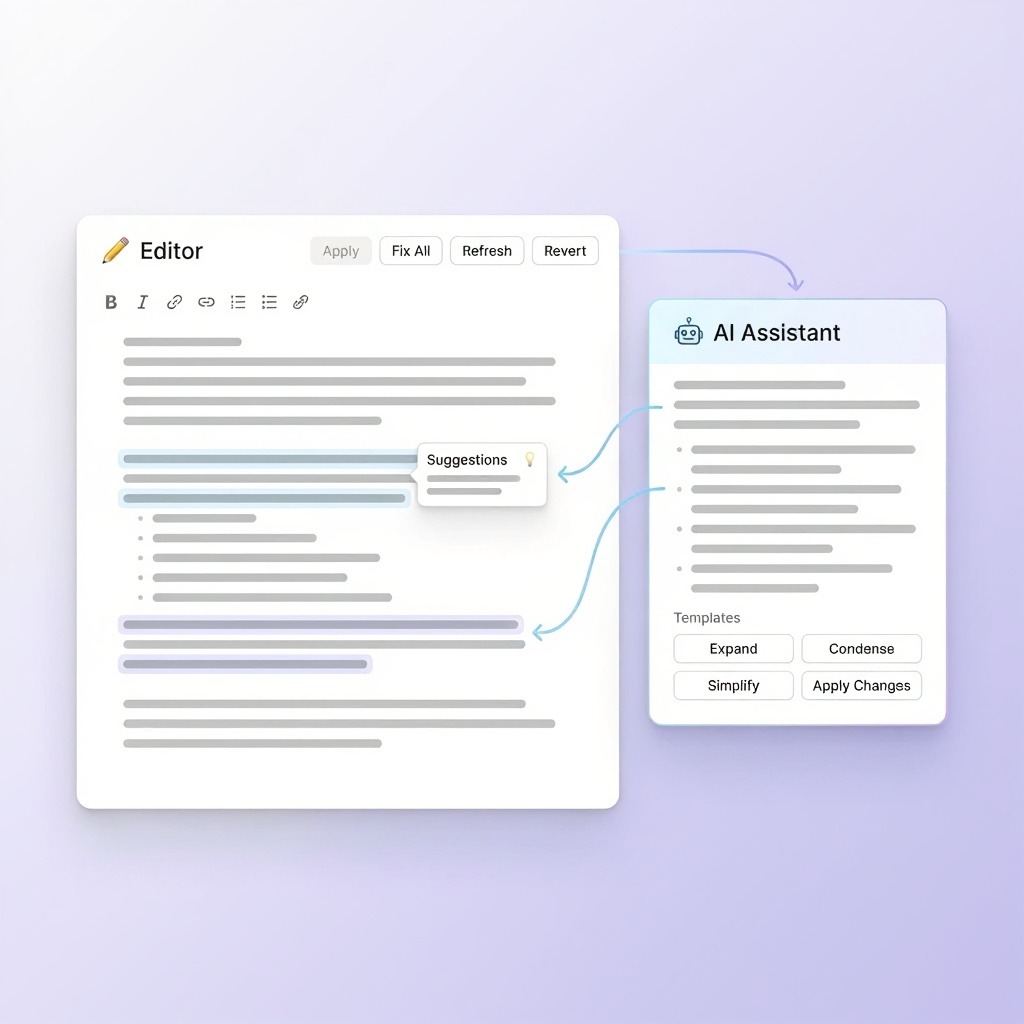
- OptiWrite AI: Designed for SEO-focused content workflows, OptiWrite AI goes beyond grammar and readability by providing structured recommendations to improve search performance. The AI editor analyzes content sections in context and suggests targeted edits to increase overall SEO score, strengthen keyword coverage, and improve structural clarity. It’s especially useful for writers and teams optimizing long-form content for ranking and consistency.
When selecting AI editing tools, consider your writing needs: are you looking for grammar correction, style enhancement, or readability improvement? Tailoring your choice can significantly elevate your writing process.
Measuring Success: Key Performance Indicators for AI-Assisted Writing
To effectively evaluate the impact of AI-assisted writing on your workflow, it’s essential to identify key performance indicators (KPIs) that measure writing efficiency and productivity. These KPIs might include:
- Time Saved: Compare the time spent on writing tasks before and after implementing AI tools to assess gains in efficiency.
- Completion Rate: Monitor how many projects are completed on time, as enhanced writing automation can support meeting deadlines.
- Quality of Output: Utilize feedback scores from peers or readers to evaluate the effectiveness of drafts generated with AI assistance.
- Revision Cycles: Track the number of revisions required, as effective AI tools can reduce this by improving initial drafts.
By regularly measuring these indicators, writers can continuously refine their workflows, ultimately enhancing overall writing efficiency.
Challenges and Considerations
While the AI-assisted writing workflow offers innovative tools for enhancing creativity and efficiency, it also presents several challenges and considerations. One significant concern is the potential for over-reliance on technology, which can lead to diminished writing skills. For instance, industry professionals often emphasize that while AI can generate content quickly, it tends to lack the nuanced understanding of complex topics typically provided by human writers.
Another challenge is ensuring the accuracy of AI-generated information. Inaccurate data can compromise the integrity of the editing workflow, as writers must spend additional time fact-checking outputs. Additionally, the ethical implications of using AI in content creation cannot be overlooked; plagiarism and originality remain hot topics in educational and professional settings.
Ultimately, while the efficiency brought by AI is undeniable, it's essential to approach its integration with caution to maintain both quality and authenticity.
Ethical Implications of AI in Writing
The integration of AI in the writing process raises significant ethical considerations that merit careful reflection. As the AI-assisted writing workflow becomes more prevalent, questions of authorship and authenticity emerge. Who is the true author of a piece created with the help of AI tools? This blurring of lines can undermine the originality expected in written works, leading to potential copyright issues and concerns over intellectual property. Moreover, reliance on AI may foster complacency among writers, affecting their development and depth of understanding in crafting content. It's essential to strike a balance, ensuring that these tools enhance creativity without overshadowing the human touch that characterizes authentic writing. As we navigate this evolving landscape, fostering awareness and establishing guidelines around ethical standards will be crucial to preserve the integrity of the writing profession.

Conclusion
An effective AI-assisted writing workflow isn’t about writing faster at the expense of quality—it’s about creating a system that supports better thinking, clearer structure, and more consistent output. When AI is integrated thoughtfully into research, drafting, and editing, it becomes a powerful partner rather than a crutch.
The key is balance. AI tools can accelerate workflows, surface insights, and improve clarity, but the writer’s judgment, creativity, and intent remain essential. By measuring performance, addressing ethical considerations, and refining how these tools fit into your process, you can build a writing workflow that scales without losing authenticity.
As AI continues to evolve, writers who approach it as a strategic assistant—not a replacement—will be best positioned to produce high-quality content efficiently and sustainably.
Frequently Asked Questions
Sources
- USAFacts, 2025. https://usafacts.org/state-of-the-union/
- Deloitte Insights, 2025. https://www.deloitte.com/us/en/insights/topics/economy/global-economic-outlook/weekly-update/weekly-update-2025-06.html
- Wikipedia, 2023. https://en.wikipedia.org/wiki/Demographics_of_the_United_States
%20Do%20in%20Your%20Writing%20Workflow.jpg)