

How to Audit Your Content: A Step-by-Step Guide for Better Rankings and Conversions
In the digital landscape, a content audit is an essential process that evaluates your existing content's effectiveness and relevance. By conducting a thorough content performance analysis, businesses can identify opportunities for improvement, optimize their SEO strategies, and ultimately drive higher conversions. Regular audits are critical; according to a 2022 study by Semrush, 65% of companies that succeed in content marketing engage in systematic content audits. This content audit guide will walk you through the steps to assess and enhance your content's impact. Whether you're looking to refresh aging blog posts or align your website with the latest SEO practices, understanding the significance of content audits is vital for maintaining a competitive edge in the market. In practice, content audits are often the fastest way to unlock existing growth—improving rankings and conversions without creating new content from scratch.
Step 1: Define Your Goals for the Audit
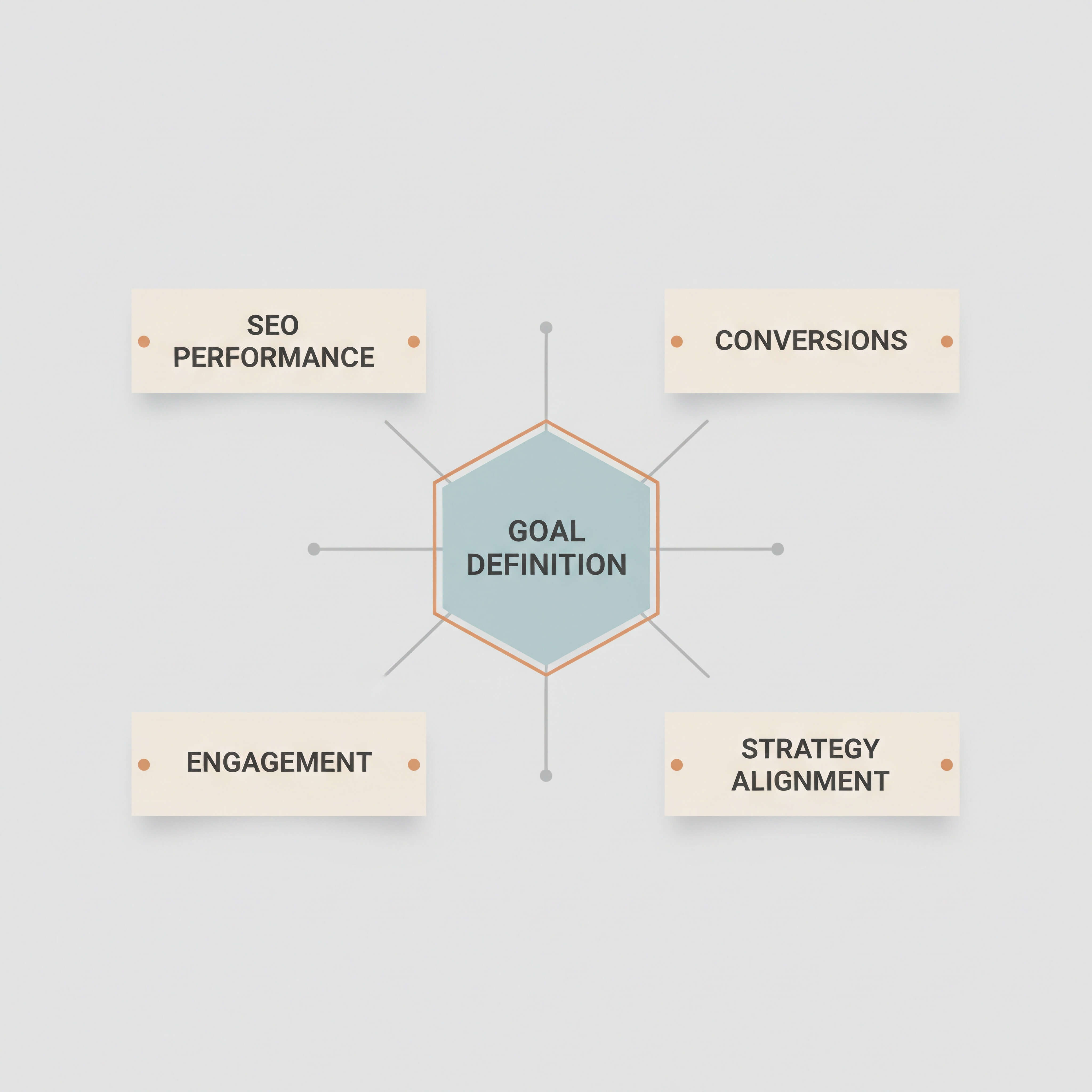
Before embarking on a content audit, it's crucial to define clear and specific goals. This step lays the foundation for your content audit guide, ensuring that your evaluation is targeted and effective. Common objectives include improving search engine rankings, increasing conversion rates, or enhancing audience engagement. For instance, if your goal is to boost SEO performance, you might focus on identifying underperforming content or optimizing existing articles for relevant keywords.
Another common objective might be to evaluate your content strategy—ensuring alignment with your overall business goals. For example, if you're launching a new product, your audit may reveal gaps in content that could be filled to better support this launch. By clarifying these goals, you not only streamline the audit process, but you also create measurable outcomes that can demonstrate the value of your content investment. Remember, a well-defined purpose enhances the effectiveness of your content strategy evaluation and drives better business results.
Step 2: Create a Content Inventory
Creating a comprehensive content inventory is crucial for an effective SEO content audit and website content assessment. Begin by compiling a list of all existing content on your website, including blog posts, articles, landing pages, and multimedia. Start with a spreadsheet, using columns for the content title, URL, publish date, last updated date, word count, content type, and target keywords. This will give you a clear overview of your current content landscape.
To simplify this process, consider using tools like Screaming Frog or Google Analytics. These tools can automatically crawl your website and export lists of your pages, which can then be imported into your spreadsheet for further analysis. Additionally, include notes on the performance of each piece, such as organic traffic metrics and engagement rates. This inventory will serve as the foundation for your content assessment, enabling you to identify gaps, redundancies, and opportunities for improvement, further enhancing your content audit guide.

Step 3: Assess Content Performance Metrics
This step focuses on what your content is doing today—measuring how users and search engines currently interact with it. To enhance your content effectiveness review, it’s crucial to assess key content performance metrics. Focus on traffic and engagement as primary indicators of how well your content resonates with your audience. Traffic metrics reveal the number of visitors your pages attract, while engagement metrics show how users interact with your content, such as time spent on the page and bounce rates.
Research indicates that 53% of websites saw a traffic increase after updating their content, according to Semrush (2023). This highlights the importance of regularly reviewing and optimizing your existing materials. Utilize tools like Google Analytics to track these metrics effectively, and set benchmarks to measure progress. Analyze which pieces draw in the most visitors and keep them engaged; this will guide your strategy on what content to improve or repurpose. By consistently monitoring these metrics, you not only enhance overall content performance but also drive better rankings and conversions.
Step 4: Evaluate Content Quality and Relevancy
This step focuses on why your content is performing the way it is, evaluating quality, relevance, and intent alignment. In this step, you will conduct a thorough content quality audit to ensure your material aligns with user intent and follows SEO best practices. Start by reviewing each piece of content for its originality and depth. Does it offer fresh insights, or is it rehashing common knowledge? High-quality content is not only informative but also engaging, making it more likely to retain readers and encourage sharing.
Next, perform a content relevancy assessment. Ask yourself if the content meets the needs of your target audience. Use tools like Google Analytics to analyze user behavior: are visitors spending time on the page, or are they bouncing off quickly? This can indicate whether your content resonates with their search intent. Additionally, check for keyword optimization—your content should naturally integrate relevant keywords without sacrificing readability. By focusing on both quality and relevancy, you'll enhance user experience, leading to improved rankings and conversions, which aligns with the objectives of your content audit guide.

Step 5: Perform a Content Gap Analysis and Prioritize Content Updates
A content gap analysis is a strategic method used to identify opportunities where your content is lacking in relation to your audience's needs and competitor offerings. It involves assessing your existing content against target keywords and topics that are relevant to your industry but are currently underserved or not addressed at all. This process helps you uncover gaps in your content landscape that present opportunities for new articles, blogs, or resources.
To conduct an effective content gap analysis, follow these steps:
- Identify Your Target Keywords: Start by selecting keywords that are important for your niche and are sought after by your audience.
- Analyze Competitor Content: Review your competitors' websites to see what topics they cover that you don’t. Take note of their strongest content pieces.
- Conduct an SEO Content Evaluation: Use SEO tools to assess how your content performs against these keywords. Look for keywords that your competitors rank for that you don’t.
- Compile Your Findings: Create a list of content opportunities that emerge from your analysis, prioritizing those that align closely with your audience's needs and interests.
After completing your content effectiveness review, it’s essential to prioritize which pieces need updates to maximize impact. As a general rule, prioritize content that already attracts traffic but underperforms on conversions or engagement—these pieces typically offer the highest return on optimization effort. Start by analyzing performance data such as traffic, engagement rates, and conversion stats. Use this data to determine which content significantly contributes to your overall goals. For instance, if a blog post consistently drives high traffic but has low conversions, it may need a different call-to-action or additional links to relevant products.
Next, align your content updates with your business objectives. If your aim is to boost sales for a specific product, prioritize updating content that can directly influence those sales. Create a content optimization checklist to help guide your updates. Include factors like search engine rankings, relevance to your audience, and alignment with current trends.
By systematically approaching your content updates based on data and strategic goals, you ensure that your efforts yield the highest possible return on investment, solidifying the insights gathered from your content audit guide.
Step 6: Implement Changes and Improvements
Once you’ve completed your content performance analysis, it’s time to implement the necessary changes to boost rankings and conversions. Start by referring to your content optimization checklist to ensure that each piece aligns with SEO best practices. Focus on enhancing the quality of your content by updating outdated information, improving readability, and integrating engaging visuals. Additionally, incorporate relevant keywords throughout your content to better address user intent and search queries.
For example, if you find sections of your content that are underperforming, consider rewriting those segments with clearer language or adding statistics that bolster your arguments. Remember that content quality plays a crucial role in your success—research shows that 44% of marketers experience better outcomes when enhancing their content quality (Semrush, 2023). This highlights the importance of taking the time to refine your work.
Lastly, monitor the outcomes of these improvements. Use analytics tools to track changes in performance, adjusting your strategy as necessary to ensure continuous growth. Content optimization is rarely a one-time task; small, iterative improvements compound over time and often outperform large, infrequent updates.
Step 7: Monitor and Measure Results
After completing your SEO content audit, the real work begins with monitoring and measuring the results of your changes. It's crucial to track content performance metrics continuously to understand how the adjustments impact your rankings and conversions over time. Aim to set up regular check-ins—monthly or quarterly—to analyze these metrics, such as organic traffic, bounce rates, and conversion rates.
Use tools like Google Analytics and Search Console to measure long-term results. Assessing trends over time rather than just immediate spikes allows for a clearer picture of success and areas needing improvement. Make note of how any specific changes made during the audit—like optimizing headlines or updating keywords—affect user engagement and SEO performance.
Documenting these findings is essential for refining future content strategies. This ongoing evaluation will ensure that your content remains relevant, competitive, and aligned with both user needs and search engine algorithms, as emphasized throughout this content audit guide.
Conclusion
In summary, conducting a thorough content audit is essential for enhancing your website's SEO and boosting conversions. This content audit guide has outlined the importance of evaluating your existing content, identifying gaps, and optimizing for both user engagement and search engine visibility. By regularly auditing your content, you can ensure that your messaging aligns with current trends, improves keyword targeting, and provides value to your audience. Implementing the insights gained from your audit will not only help you refine your content strategy but also elevate your overall digital presence. Remember, a well-executed content audit is a critical step toward fostering better engagement and achieving higher search rankings, ultimately leading to increased conversions. Take the time to invest in your content, and you will reap the rewards in terms of both traffic and revenue. Start with a limited scope—such as your top 10 to 20 pages—and expand your audit as patterns emerge. This keeps the process manageable while delivering measurable results quickly.
Frequently Asked Questions
Sources
- Semrush, 2022. https://seowind.io/content-marketing-statistics/
- Relevance Digital, 2023. https://relevance.digital/the-benefits-of-a-digital-content-audit/
- Semrush, 2023. https://ampifire.com/blog/content-marketing-statistics/
- Semrush, 2023. https://www.scribenational.ca/blog/content-audit